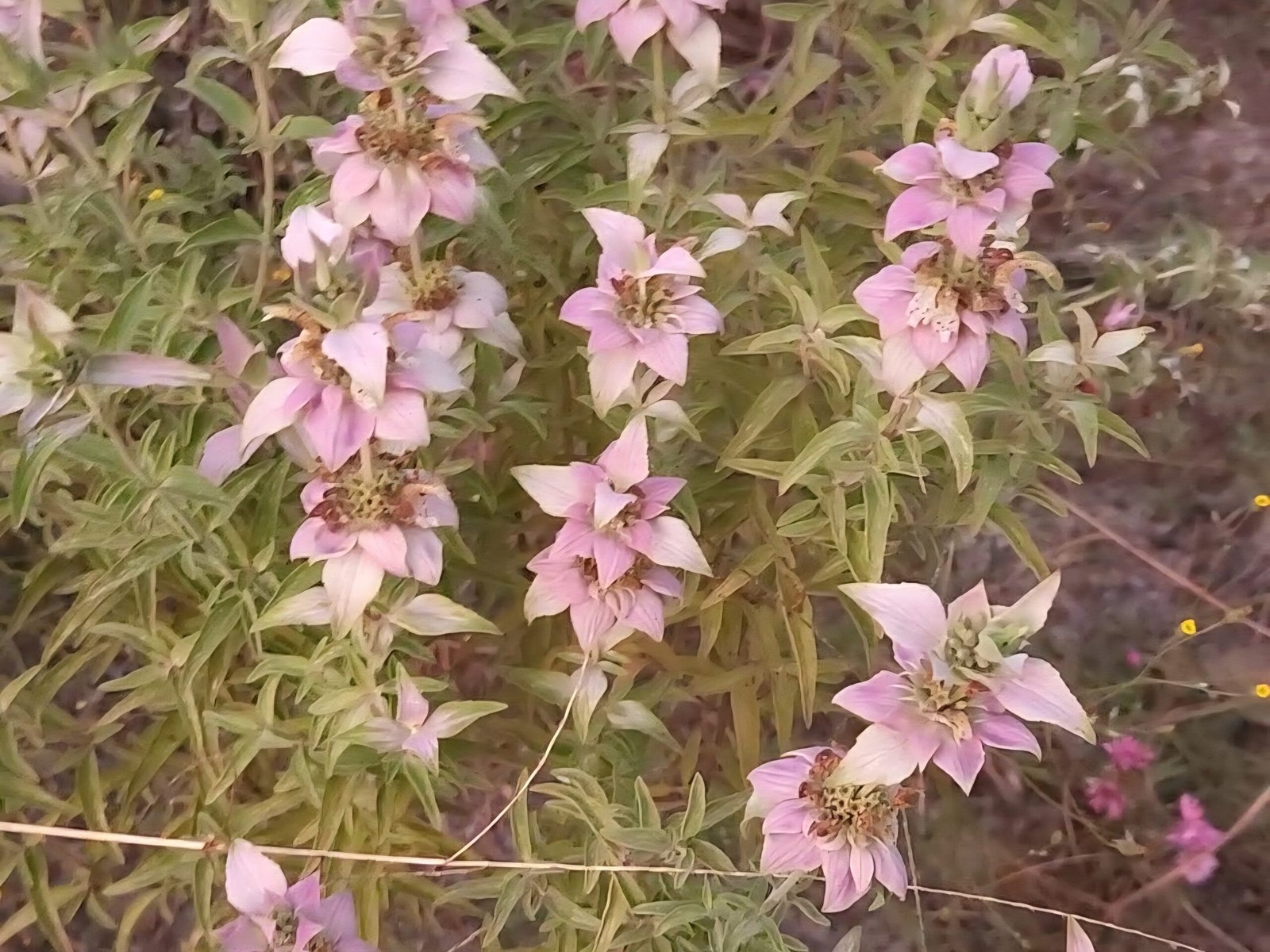
In the world of natural plant medicine, oregano is a household staple — widely praised for its strong aroma, fiery essential oil, and well-known cleansing properties. But there’s another herb, one native to our own soil here in the South, that quietly outperforms oregano in balance, breadth, and staying power:
Horsemint (Monarda punctata) — also known as wild bergamot or spotted bee balm.
While oregano (Origanum vulgare) owes its punch to high levels of carvacrol, horsemint draws its strength from a more strategic synergy: thymol + carvacrol + a supporting cast of antioxidant and soothing compounds.
The result? A plant that is smoother, stronger, gentler, and longer-lasting.
The Chemistry Behind Their Strength
Both herbs come from the mint family (Lamiaceae), so they share some aromatic traits. But their dominant compounds set them on very different paths — and explain why horsemint is often preferred for daily or long-term use.
Oregano’s primary compound: Carvacrol
Fast-acting
Highly aromatic
Well studied
Also known for being sharp, volatile, and irritating in concentrated form
It’s powerful — but many people experience the signature oregano “throat burn.”
Horsemint’s key compound: Thymol
Equally antimicrobial
More stable at room temperature
Much gentler on mucous membranes
The same compound used in many natural mouthwashes for its balanced action
Where oregano “hits hard,” horsemint “holds steady.”
And because thymol maintains potency longer than carvacrol, horsemint extracts tend to retain their strength over time with less degradation.
This is one of the biggest real-world advantages horsemint has over oregano.
Supporting Compounds That Make the Difference
Oregano relies heavily on one hammer: carvacrol.
Horsemint brings an entire toolkit.
Horsemint contains:
p-Cymene & γ-Terpinene — synergy boosters that help thymol and carvacrol work more efficiently
Rosmarinic acid — a potent plant antioxidant found in rosemary and sage
Flavonoids & polyphenols — plant protectants with strong antioxidant potential
Linalool & geraniol — soothing aromatic oils associated with calm and comfort
This collection gives horsemint a full-spectrum profile, meaning its benefits don’t rely on a single volatile oil.
In tincture form, that matters even more: you capture both volatile oils and water-soluble compounds that oregano essential oil processing simply doesn’t retain.
How They Compare in Real-World Use
Antimicrobial activity
Both herbs show strong antimicrobial action in studies.
Oregano acts fast — like a punch.
Horsemint, thanks to thymol, holds its effect longer and feels far smoother in use.
Anti-inflammatory depth
Horsemint takes the lead here.
Its rosmarinic acid and flavonoids give it a broader plant chemistry foundation, creating a more well-rounded profile.
Respiratory support
Oregano still has the edge for strong vapors thanks to cineol and terpinene-4-ol.
It’s excellent for steam bowls, chest rubs, or sinus clearing.
Digestive comfort
Horsemint wins by a mile.
Its warm, minty profile settles gently without the throat burn or sharpness that many people experience with oregano-rich preparations.
Flavor & aroma
Oregano: sharp, peppery, intense
Horsemint: warm, minty, lightly sweet
Most folks find horsemint far easier to take consistently — especially in tinctures or teas.
Shelf Stability & Extraction Performance
Carvacrol-rich herbs (like oregano) oxidize quickly, which can affect scent, flavor, and aromatic strength.
Thymol-rich herbs (like horsemint) are significantly more stable, resisting oxidation and remaining potent without refrigeration.
In practice, this means:
Horsemint extracts remain stable for longer periods
Oregano extracts often require darker bottles and quicker use
This chemical resilience is one major reason horsemint has been traditionally favored for long-term preparations.
Native Origins & Environmental Adaptation
Horsemint is a true American-native mint, thriving in the heat, dryness, and sandy soils of the South — the exact conditions that stimulate stronger aromatic production.
Plants growing under environmental stress tend to produce more protective compounds, and horsemint is a perfect example:
More sun = more thymol
More heat = more total phenolics
More drought = richer aromas
Oregano evolved in the Mediterranean — a different climate, producing a different balance of oils optimized for quick volatilization rather than long-term stability.
It’s a clear demonstration of how ecology shapes chemistry.
The Verdict: Different Strengths, Shared Purpose
Here’s a simplified comparison:
| Property | Oregano | Horsemint |
|---|---|---|
| Antimicrobial strength | ★★★★★ | ★★★★★ (equal but smoother) |
| Anti-inflammatory depth | ★★★★☆ | ★★★★★ |
| Shelf stability | ★★★☆☆ | ★★★★★ |
| Gentleness for internal use | ★★☆☆☆ | ★★★★★ |
| Topical clearing / sinus support | ★★★★★ | ★★★★☆ |
Both herbs have a role — but horsemint offers broader chemistry, smoother action, and better long-term balance.
It’s the herb that works not just hard… but smart.
Bringing It All Together
Oregano hits like a hammer — fast, hot, and hard.
Horsemint is the toolbox — steady, dependable, and designed for daily resilience.
By pairing thymol with carvacrol (instead of relying on carvacrol alone), horsemint delivers a synergistic balance that herbalists have long appreciated and modern chemistry now explains.
Here on our Texas homestead, we harvest horsemint at peak bloom and let nature speak for itself — wild, balanced, and born for the climate that shaped it.
References:
- Carvacrol antimicrobial studies – PubMed
- Medicinal effects of Thymol – PubMed
- Rosmarinic Acid antioxidant and anti-inflammatory effects – PubMed
- Phytochemical composition of Monarda Punctata – PubMed
- Synergy of Thymol and Carvacrol – PubMed
- Synergy of p-Cymene and γ-Terpinene with Thymol and Carvacrol – PubMed
Want to dig deeper into what gives horsemint its edge?
We’ve put together a full research summary covering its active compounds, growing conditions, and published scientific findings.